
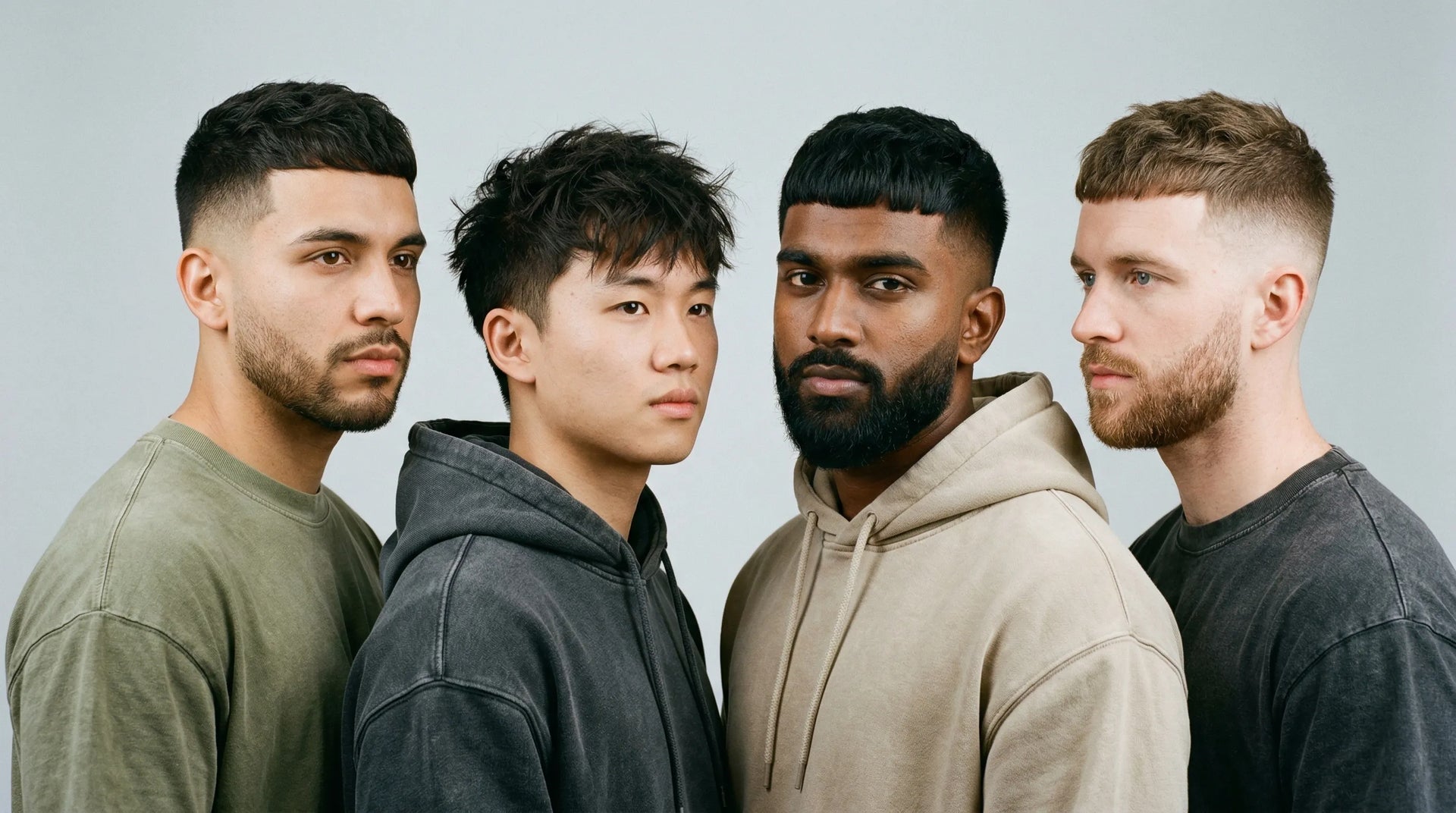
The textured crop haircut is currently the most-requested men's cut in barbershops, and it's earned that position. Short on the sides, slightly longer on top, styled forward with natural texture and separation — it works across hair types, face shapes, and effort levels. Here are 12 of the best variations, with how-to-style instructions and product recommendations for each.
What Makes It a Textured Crop
The defining characteristics: a cropped fringe (anywhere from mid-forehead to just above the brow), a layered or point-cut top for separation and movement, and shorter faded or tapered sides. What separates it from a standard crop is that deliberate, piecey texture on top — not clean and polished, but not messy either.
Here's something most articles miss about this style: the fringe isn't where the texture lives. The fringe tends to sit slightly heavier and flatter, while the choppy, separated texture is in the mid-section and crown behind it. The contrast between the weighted fringe edge and the loose, layered interior is what makes the style read as intentional rather than grown out. If you try to add texture into the fringe itself, it looks messy. Let it sit, let the top do the work.
12 Best Textured Crop Haircuts for Men

1. Classic Textured Crop (Mid Fade)
This is the baseline — the version most people picture when they search for a textured crop. Mid fade on the sides, forward-facing fringe sitting just above the brow, and a choppy, layered top with natural movement. Versatile enough for the office, casual enough for a weekend. The mid fade is the sweet spot: enough contrast to look deliberate, enough weight left on the sides that the grow-out phase stays manageable for four to five weeks without looking neglected.
How to style: Work a small amount of Matte Cream Clay through dry hair, from the back toward the front. Let the fringe fall forward naturally — avoid pressing it flat. Use your fingertips to break apart the top and build separation. The clay scales with the amount you use: start small, add more if you want stronger hold.
Best for: Most hair types. Face shapes: oval, oblong, round (the forward fringe balances width).

2. Textured French Crop
The French crop and the textured crop look similar from across the room but are built differently. The French crop has a blunter, heavier fringe — it cuts straight across the forehead in a defined line rather than falling in loose, piecey sections. The top is still textured and choppy, but the strong horizontal fringe is the defining feature. It reads sharper and more structured. The blunt fringe also minimizes the appearance of a receding hairline by drawing the eye forward and down rather than letting the hairline show.
How to style: Apply Clay Texture Powder to dry hair at the roots first for lift and grip, then follow with a small amount of Matte Cream Clay through the length. Let the fringe sit heavy and forward — this version isn't about airy separation at the front. The texture lives behind the fringe, not in it. Together as the Textured Hold Bundle if you plan to run both regularly.
Best for: Straight to wavy hair with medium to good density. Face shapes: round, wide forehead, receding hairline.

3. Textured Crop with Skin Fade
The highest-contrast version. The sides drop all the way to skin, creating a sharp visual break between the bare sides and the textured top. It's a bolder choice — maintenance-heavy (skin fades grow out noticeably within two to three weeks) and more committed in look. When it's fresh, nothing reads cleaner. It works especially well on thick hair: the skin fade strips the visual bulk from the sides, letting the texture on top take center stage without the whole style looking wide or heavy.
How to style (thick hair): Start with Hydrating Pomade on damp hair. Work it through to the roots, then blow dry in. This introduces moisture that makes thick hair malleable and prevents the clay from creating a poofy result. Once dry, finish with a small amount of Heavy Hold Clay through the top for strand separation and all-day hold. Moisture calms — clay defines. Both together as the Thick Hair Control System if you're running this system daily.
Best for: Thick to medium hair. All face shapes — the high contrast elongates and sharpens. Budget for a trim every two to three weeks to keep the sides sharp.

4. Textured Crop Taper Fade
The most professional-friendly and low-maintenance crop variation. Instead of blending down to skin, the taper gradually reduces length — the sides never hit bare skin, which means the grow-out phase looks intentional rather than overgrown. It's a softer finish. Good for workplaces that lean conservative, or for guys who don't want to be at the barber every two weeks. The textured top stays the same — it's only the sides that are less aggressive.
How to style: Wax Fiber is the right call here. Medium-high hold with a natural finish — not too structured, not too loose. Emulsify a dime-sized amount fully in both hands, then work from back to front so you don't overload the fringe. The result should look like you have good hair, not like you spent time on it.
Best for: All hair types. Especially good for professional settings and guys who prefer longer intervals between trims. Oval and square faces.

5. Textured Crop High Fade
The high fade starts near the temples — much higher up the head than a mid or skin fade. It creates more dramatic contrast, but it's maintenance-heavy: because the blend sits so high, regrowth shows fast. There's also a proportion rule that most articles skip: a high fade demands a shorter, tighter fringe. High fade plus a heavy, hanging fringe creates an imbalance where the top looks like a floating block disconnected from the stripped sides. Shorter fringe, more texture in the crown, tighter sides — that's the combination that keeps the proportions right.
How to style: Work Matte Cream Clay through dry hair. Keep the fringe trim and forward — this version is less about fringe weight and more about the textured crown doing the heavy lifting. Budget for every two to three weeks at the barber.
Best for: Medium to thick hair. Face shapes: oval, oblong, triangular. Works best with a shorter fringe — gets awkward fast when the fringe grows long without a trim.

6. Textured Crop Drop Fade
The drop fade curves down and around the ear rather than running straight across. The result is a more contoured silhouette at the back — the fade itself becomes a design element, not just a shortening technique. On men with flatter heads at the back, the curve adds perceived depth and shape that a straight fade wouldn't. It's trending for a reason: it's different enough to be interesting, but not loud enough to read as a statement cut.
How to style: Apply Texturizing Sea Salt Spray to damp hair and blow dry loosely for a texture base. Once dry, work a small amount of Matte Cream Clay through the top for shape and hold. The spray builds the texture foundation; the clay refines it without making it stiff. Both together as the Texture Waves Hair Bundle if you're running this as your daily routine.
Best for: Most hair types. Especially good for rounder head shapes where the back profile benefits from added contour. Works with most face shapes.

7. Messy Textured Crop
The loosest interpretation of the crop. Longer layers, more movement, less fringe definition. The sides are still short, but the top has extra length that gives it a lived-in, tousled look rather than the structured texture of the classic version. This is the crop for guys who prefer their hair to look like it happened. It's not lazy styling — the right product system still matters. But once it's there, it reads effortless.
How to style: Apply Texturizing Sea Salt Spray to damp hair, scrunch it through, then blow dry loosely without directing. Once dry, work a small amount of Wax Fiber through for hold and separation. Light-handed is key here — this style suffers when it's overworked. Wax Fiber has enough grip to hold the shape without making it look like you tried.
Best for: Straight to wavy hair. Thinner to medium density. Oval, oblong faces. Any face shape that benefits from added volume and movement on top.

8. Medium-Length Textured Crop
More length on top — typically 2.5 to 3.5 inches through the crown versus the 1.5 to 2 inches of the short crop. The sides stay short (faded or tapered), but the added top length creates more movement, more versatility, and more styling options. This is also the crop's second act. When a short textured crop hits week four or five and the fringe starts sitting on the eyes, this medium-length version is where it's heading. Instead of immediately rebooking a trim, let it grow into this version — it's a full style in its own right.
How to style: Wax Fiber handles the extra length better than clay — medium-high hold with more natural movement, which suits longer hair better than the firmer grip of clay. Emulsify fully in both hands and work from root to tip so the lower lengths have support, not just the surface. A quick rough blow dry before product builds more volume at this length than air drying does.
Best for: All hair types. Especially good for straight and wavy hair where the extra length creates natural movement. All face shapes. The right destination for the short crop's natural grow-out.

9. Wavy Textured Crop
Wavy hair is one of the best hair types for a textured crop because the natural wave gives the style built-in texture without extra styling work. The key is working with the wave rather than against it. Over-directing wavy hair or blowing it completely flat kills the movement that makes this version special. The sides stay short (taper or low fade works better here than a skin fade, which can look too aggressive against the softer wave texture), and the top is cut to let the wave move naturally through the crown and fringe.
How to style: Apply Texturizing Sea Salt Spray generously to damp hair, then rough dry with a blow dryer — no nozzle, just freehand or a diffuser. Let the wave form as it dries. Once dry, finish with a light application of Matte Cream Clay to define and hold. Less product is more on wavy hair — you're enhancing what's already there, not building structure from scratch.
Best for: Type 1c to 2b wave patterns. Taper or low fade works better than a skin fade. All face shapes.

10. Textured Crop Undercut
The undercut version replaces the fade with a disconnected shave — the sides go very short or to skin, but there's no gradual blend. The line where the top hair meets the sides is abrupt. It's an edgier look that creates more visual drama than any fade variation. The upside: the disconnected line tends to stay defined a bit longer between trims than a fade does, since the grow-out doesn't soften a blend — it just adds length to a clean break.
How to style (thick hair): Thick hair benefits from a moisture step before any clay. Work Hydrating Pomade through damp hair to introduce moisture and break up the natural clumping that thick hair produces. Blow dry in. Then apply Heavy Hold Clay to dry hair for strand separation and hold that lasts. The pomade reduces the poof that clay alone creates on thick hair. The clay gives it the texture and grip to hold shape all day.
Best for: Thick to medium hair. Square and angular jawlines. Not recommended for very round faces — the hard disconnected line can emphasize width rather than balance it.

11. Textured Edgar Crop
The Edgar crop is a harder, more geometric version of the French crop. The key difference is the fringe — it's blunter, sharper, and cuts straight across the forehead in a very defined horizontal line, often paired with a skin fade or tight taper to match the precision of the top. The top is still textured and choppy, but the strong geometric fringe makes it unmistakably deliberate. Popular with younger guys and anyone who wants a more distinctive look than the standard crop. Maintenance is non-negotiable here — the sharp fringe line is the entire point, and it softens fast without a trim every two to three weeks.
How to style (thick hair): Work Hydrating Pomade through damp hair, blow dry forward, then finish with Heavy Hold Clay for maximum definition. For medium hair: Matte Cream Clay alone works — use slightly more than you normally would to get the stronger, more defined finish this style calls for.
Best for: Thick to medium hair. Oval, square, triangular faces. Requires a trim every two to three weeks to keep the fringe line sharp.

12. Side-Swept Textured Crop
Most textured crops go forward. This one goes sideways — the top is directed to one side with a soft sweep rather than pushed straight down the forehead. The result is more polished and adaptable: it reads professional in a way the standard crop doesn't, works in formal settings, and covers more face shape versatility than any other crop variation. Sweeping hair to the side adds asymmetry that softens round faces and adds width to longer, narrower ones.
How to style: The blow dry sets the directional memory that the product locks in — blow dry in the direction you want the sweep before applying anything. Work Hydrating Pomade through damp hair first, direct to the side, then blow dry until completely dry. Finish with a small amount of Matte Cream Clay through just the top sections for texture. The pomade gives the smooth, controlled movement. The clay keeps it from looking like a slicked side part.
Best for: All hair types. Particularly good for straight and wavy hair. Adapts to most face shapes. Best choice for professional environments or occasions where the standard crop feels too casual.
What to Tell Your Barber
The textured crop has a lot of variables, and being specific upfront gets you a better result. Cover these four:
- Fade type and height. "Mid fade," "skin fade," "low taper" — these aren't interchangeable. Specify the fade type and the height (high, mid, low) as separate details. "High skin fade" and "low skin fade" are different haircuts.
- Fringe position. "Just above the brow" vs "mid-forehead" changes the whole proportion of the cut. Bring a photo if you're not sure how to describe it verbally.
- Length on top. Ask in inches — 1.5 to 2 inches for a short crop, 2.5 to 3.5 inches for a medium-length version. Guard numbers are for the sides, not the top.
- Texture technique. Tell them you want point cutting or razor work for separation and movement. "Just trim it" won't produce the choppy, layered result.
For more on barber communication, see our full guide: How to Ask Your Barber for the Haircut You Want.
Frequently Asked Questions
What is a textured crop haircut?
A textured crop is a men's haircut with shorter faded or tapered sides and a slightly longer top cut using point-cutting or razor techniques to create natural-looking separation and movement. The defining features are a forward-facing fringe (anywhere from mid-forehead to just above the brow) and a choppy, layered top that looks lived-in rather than polished or rigid. "Textured" describes the cutting technique — removing bulk from inside the hair in a way that creates visible layers and separation — rather than a single fixed style. It covers a wide range of variations: French crop, skin fade, taper, drop fade, undercut, side-swept, and more. The cut is low maintenance by design: the layering does most of the styling work, and daily product routines typically take under five minutes. It suits most hair types (straight, wavy, thick, fine) and most face shapes, which is why it's consistently one of the most-requested men's haircuts.
What's the difference between a textured crop and a French crop?
The main difference is the fringe. The French crop has a blunter, heavier fringe that cuts more definitively straight across the forehead — the front hairline is intentionally uniform and sharp. The textured crop has a softer fringe that falls in looser, piecey sections rather than a defined line. The rest of the cut is similar: short faded sides and a layered, choppy top. In overall feel, the French crop reads sharper and more deliberate. The textured crop reads more relaxed and lived-in. Both work with most fade heights and face shapes. The French crop's blunt fringe is particularly effective for minimizing the appearance of a receding hairline — the solid horizontal line at the front draws the eye forward rather than exposing the hairline above it.
How do you style a textured crop at home?
The basic routine: apply a small amount of a matte, medium-hold product such as Matte Cream Clay or Wax Fiber to dry hair, working from the back forward so you don't overload the fringe first. Use your fingertips to break apart sections and create separation — avoid a comb or brush, which smooths out the texture you're building. For thick hair, add a pre-styling step: work Hydrating Pomade through damp hair and blow dry in before applying clay. Hydrating Pomade introduces moisture that makes thick hair malleable and stops clay from producing a poofy, clumped result. For most other hair types, one product on dry hair is all it takes. The whole routine runs under five minutes once the cut is right.
How often do you need to trim a textured crop?
Every three to five weeks, depending on fade type and how crisp you need it. Skin fades and high fades grow out fastest — the upper sides go visibly soft within two to three weeks, and by week four the contrast that defines the style softens significantly. Taper fades and mid fades give you more room, typically four to five weeks before it looks overdue. One thing most guides skip: the fringe is often what goes awkward first, not the sides. On a short crop at weeks four to five, the fringe can start sitting on the eyes or lying flat in a way that changes the whole shape. If that happens before your next trim, switching from clay to a lighter product like Wax Fiber buys you another week — less grip means more movement, and the grow-out phase reads intentional rather than neglected.
Does the textured crop work for thick hair?
Yes, and it's one of the better short haircuts for thick hair. The layering and point-cutting techniques used to create the textured top remove bulk from inside the hair — not just the surface — which prevents thick hair from pushing outward into a rounded, helmet-like shape. The product system matters: thick hair needs moisture before it needs hold. Apply Hydrating Pomade to damp hair and blow dry in — this calms the cuticle and makes thick hair cooperative without leaving it flat. Then finish with Heavy Hold Clay on dry hair for strand separation and hold that lasts all day. Without the moisture step, clay on thick hair tends to either clump or poof. The combination — moisture foundation, then texture finish — is what makes the result look like a hairstyle and not just a head of hair. For the full thick hair guide, see Best Hairstyles for Men with Thick Hair.
Which Product Is Right for You?
For most textured crop styles, Matte Cream Clay is the right starting point — it's the most versatile product in the lineup, holds as much or as little as you need based on the amount you use, and works across hair types. If your hair is thick, add Hydrating Pomade as a pre-styler before the clay. If you want more movement and less structure, or you're in the grow-out phase between trims, try Wax Fiber instead. For fine hair, apply Clay Texture Powder at the roots before any finisher — it adds the lift fine hair needs without weight.
Not sure which product type is right for you? See our wax vs clay vs pomade breakdown. Or take the hair quiz for a personalized recommendation in under two minutes. Orders over $60 ship free in the U.S.
Also on the blog: Best Men's Hairstyles 2026 — a broader look at what's working this year.